Grease Trap Cleaning Tampa: Commercial Trap Cleaning and Interceptor Pumping
Grease trap cleaning in Tampa and across the bay, on the pumping rule your inspector actually checks. Pumped to empty, measured, and documented with a signed manifest every visit.
- Quotes by phone
- Published price ranges
- Signed manifest every visit
- Hillsborough, Pinellas & Pasco
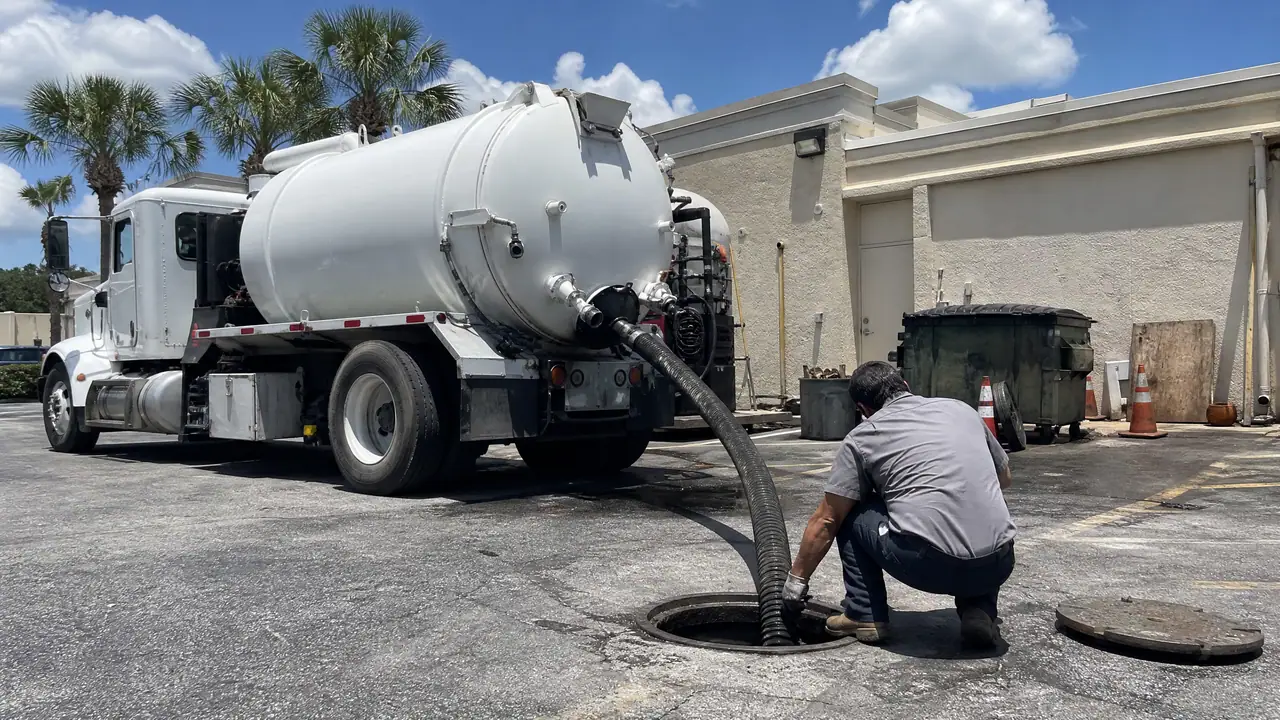
- Full pump-out, no pump-and-return (F.S. 403.0741)
- 25% grease + solids rule
- Manifest kept on site 1–3 years by local rule
- Haulers licensed under F.A.C. 62-705
Why kitchens call
When a grease trap becomes the problem
-
A Notice of Violation
Tampa gives 24 hours to clean a trap and 72 hours to pump an interceptor once a missed-frequency notice lands.
-
Floor drains backing up
Grease that gets past a full trap hardens in the line and pushes dishwater back up through sinks and floor drains mid-service.
-
A failed re-inspection
The City of Tampa bills $61 for every hour of inspector time when a re-inspection fails, and adds $50 if it has to pump the tank itself.
-
A smell in the dining room
A neglected trap gives off hydrogen sulfide, the rotten-egg smell health inspectors and customers notice first.
Services
Grease trap and interceptor services
From under-sink traps cleaned on a weekly-rule schedule to 2,500-gallon interceptors behind shared plazas.
-
 Priority service
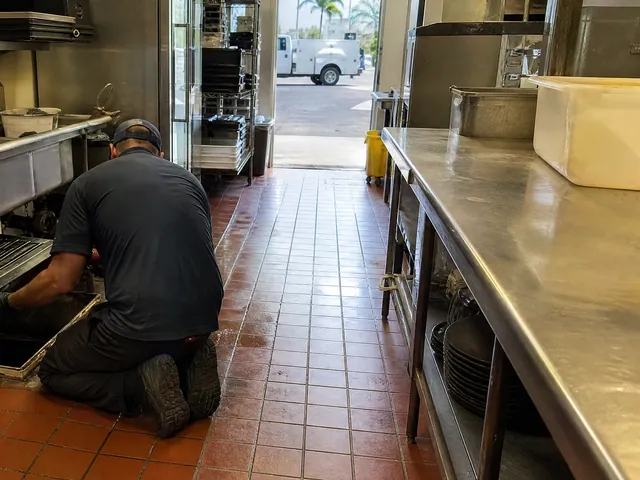
Indoor Grease Trap Cleaning
Under-sink and in-floor traps cleaned, logged and hauled away, including automatic grease removal devices.
Details -
 Priority service
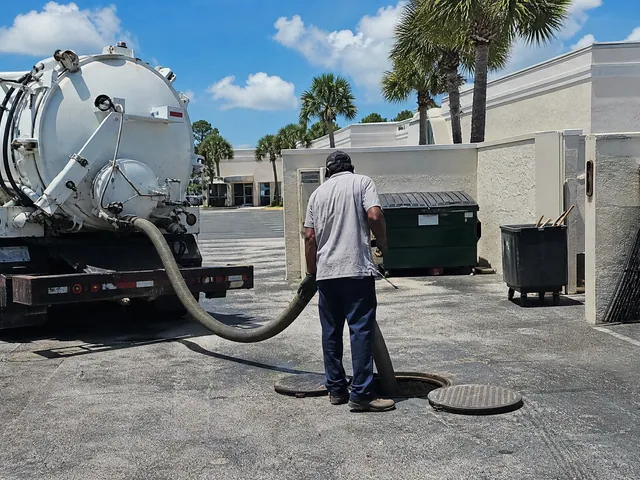
Grease Interceptor Pumping
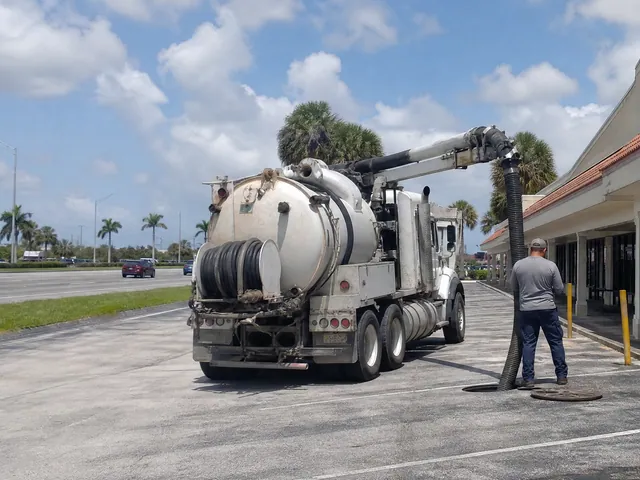
Outdoor interceptors pumped to empty, scraped and documented on the schedule your city or county enforces.
Details -
 Priority service
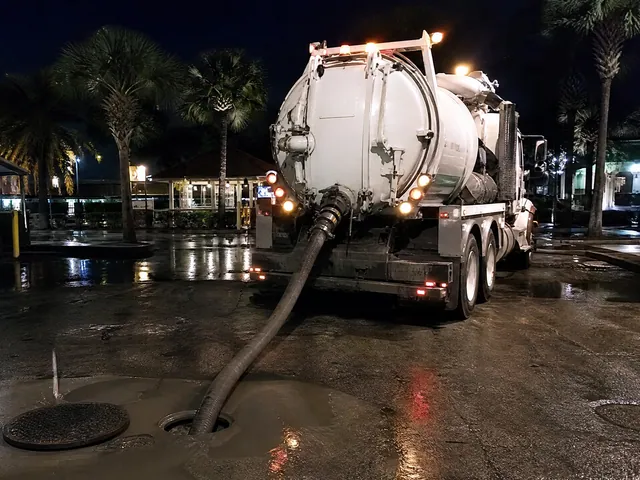
Emergency Grease Trap Pumping
Overflowing trap, backed-up floor drains or a violation deadline. Call, and here's what to do while you wait.
Details -
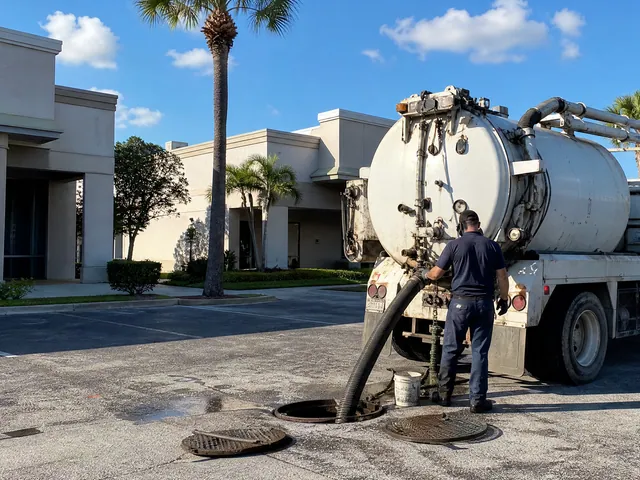 Priority service
Grease Trap Maintenance Plans
Scheduled pumping set by your jurisdiction's rule and how fast your unit actually fills, with the paperwork kept straight.
Details -
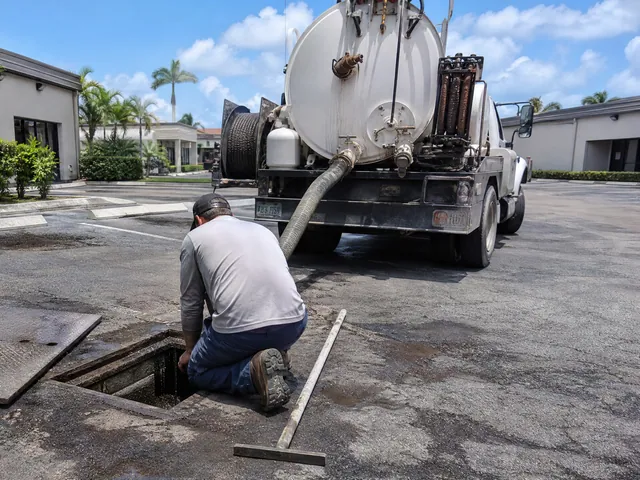
Grease Trap Inspection
A written check of the trap, its fittings and your records before an inspector or a buyer finds the problem.
Details -
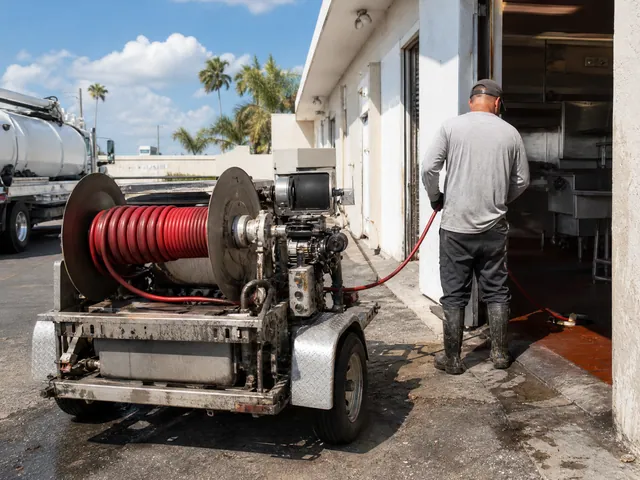
Commercial Kitchen Hydro Jetting
Grease-coated kitchen lines between fixtures, trap and sewer cleared with high-pressure water, not just punched through.
Details -
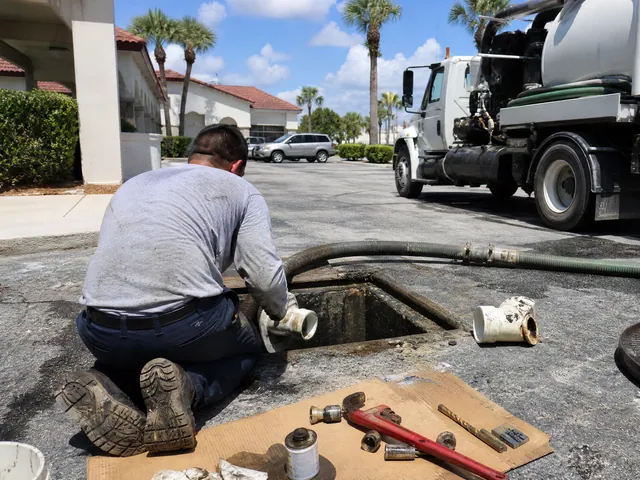
Grease Trap Repair
Broken baffles, missing tees, flow-control devices and lids found, written up and fixed before the deadline.
Details -
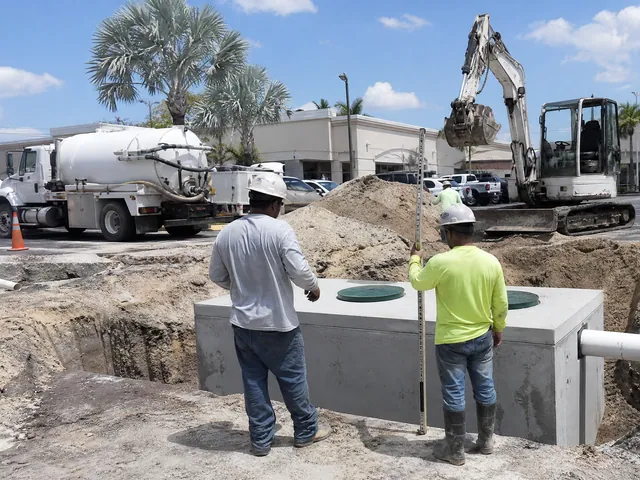
Grease Trap Installation
New and replacement traps and interceptors: sizing, permits and the triggers that make the city require one.
Details
What the City of Tampa actually requires
Grease Trap Cleaning Tampa is a commercial grease trap cleaning and interceptor pumping service for restaurants, hotels and institutional kitchens in Tampa and the surrounding bay area. Inside city limits, the rules come from the City of Tampa Grease Management Ordinance (City Code Chapter 26, Article VII), and they are stricter in some ways than people expect and looser in others.
There is no fixed pumping interval for interceptors in Tampa. Instead, the tank must be pumped before settled solids reach the outlet pipe (typically 8 inches), before grease and solids take up more than 25% of capacity, when it stops holding grease, or after any backup. Indoor traps must be opened, inspected and cleaned at least once a week. Every interceptor pump-out has to be done by a hauler registered with the City, and any enzyme or bacteria product needs the inspector's approval before it goes in the tank.
Nearby jurisdictions set their own limits. Unincorporated Hillsborough allows up to 90 days, while Pinellas County and St. Petersburg expect monthly pump-outs:
| Where the kitchen drains | Interval | The rule |
|---|---|---|
| City of Tampa | No fixed days | Pump before solids pass the outlet invert (~8 in), grease and solids exceed 25% of capacity, the unit stops retaining grease, a backup occurs, or sanitary waste enters. Tampa Code Ch. 26 Art. VII, Sec. 26-306 |
| Hillsborough County (unincorporated) | At least every 90 days | Serviced at least every 90 days; contents never over 25% of wetted volume; alternate schedules by individual approval. Hillsborough County Grease Management FAQ (Ch. 120 / Ord. 06-31 Art. VII) |
| Pinellas County Utilities | At least every 30 days | Pumped at least every 30 days; grease layer under 6 in and solids under 8 in; variance never over 180 days, voided if missed, not transferable. Pinellas County Code Sec. 126-613 |
| City of St. Petersburg | At least every 30 days | Pumped at least monthly; variance fee $275, maximum 180 days. City of St. Petersburg FOG Best Management Practices Manual |
| Pasco County Utilities | At least every 90 days | Cleaned and pumped every 90 days, or sooner once FOG and food sludge reach 20% of volume; pump until empty and clean walls, cross pipes, inlet and outlet. Pasco County Code Sec. 110-174 |
We work across Tampa's restaurant districts, including Ybor City, SoHo and South Howard, the Channel District and Water Street, Westshore, Hyde Park and Seminole Heights. The full breakdown is in how often a grease trap must be cleaned in Tampa Bay.
The difference
Why Tampa kitchens call us
-
Pumped to empty, every time
No decanting, no skimming, no water returned to the tank. That's state law, and it's the only way a pump-out actually resets the 25% clock.
-
Your rule, not a generic one
Tampa, Hillsborough County, Pinellas County, St. Pete, Clearwater, Largo and Pasco each set different limits. Your schedule follows the one that governs your address.
-
Paperwork an inspector accepts
Signed manifest, measured depths and written notes on anything broken, ready for your logbook.
-
Prices you can see first
Published price ranges on this site, with the evidence behind each one, and a price range on the phone. Ask for a written quote before work starts.
How it works
From first call to a signed manifest
-
Step 1: First call
Tell us the kitchen's address, what kind of unit you have, and when it was last pumped. We tell you which rule applies and give a price range on the phone.
-
Step 2: On-site check
We open the lids, measure grease and solids depth, and look at the baffles, tees and outlet. Ask for a written quote before work starts.
-
Step 3: Full pump-out
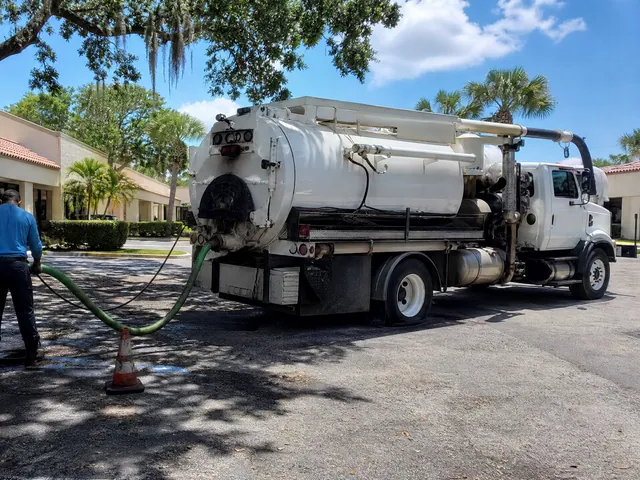
The unit is pumped to empty, walls and baffles are scraped, and the inlet and outlet are checked for flow.
-
Step 4: Manifest and schedule
You get a signed manifest for your logbook and a suggested date for the next visit, set by your rule and how fast the unit filled.
Pricing
What grease trap service costs in Tampa Bay
Typical market ranges, with the strength of the evidence shown for each. Ask for a written quote before any work starts. Prices on this site are typical market ranges, not quotes.
-
Indoor / under-sink trap (20–100 gal), per cleaning
$150–$350
per visit
Low confidence
greasetrapflorida.com Tampa Bay range $175–300 (directory, no published methodology)
-
Interceptor 1,000–1,500 gal, per pump-out
$400–$650
per visit
Medium confidence
Florida size table $400–600; Brevard public bid $0.20–$1.10/gal (≈$200–$1,650)
-
New grease interceptor installed (750–1,500 gal)
$4,000–$8,500
installed
High confidence
City of Tampa Grease Ordinance FAQ
What changes the price
- Trap or interceptor size
- How full it is and how long since the last pump
- Hose run and access from the truck
- Disposal fees and after-hours timing
Request a quote
Two quick steps. We call you back with a price range and the rule that applies to your address.
Faster by phone: (727) 476-9241
Compare
DIY vs the cheapest hauler vs doing it properly
| Factor | Do it yourself | Cheapest hauler | Done properly |
|---|---|---|---|
| What's legal | Small indoor traps only, with a written protocol (Tampa) or under 50 lb capacity (Hillsborough County) | Pump-and-return is banned statewide, but still happens | Full pump-out to empty, as Florida law and every local program require |
| What gets removed | Floating grease you can scoop | Often just the top layer and some water | Floating grease, gray water, bottom solids, and buildup scraped off walls and baffles |
| Paperwork | Your own log entry | A receipt, sometimes | Signed manifest with volume, condition and disposal ticket number |
| Checked against the rule | Rarely measured | Not measured | Grease and solids depth measured against your jurisdiction's limit |
| Problems spotted | Only what you can see | Usually not reported | Cracked baffles, missing tees and flow-control issues noted in writing |
| Real cost | Staff time; risk of a failed inspection | Low price, then repeat clogs and re-inspection fees | A known price per visit on the schedule your rule sets |
Service areas
Grease trap service across Tampa Bay
Each city and county runs its own grease program. Each area page explains the rule that applies there.
FAQ